From 2002 to 2004 I published Shade, an independent magazine about downtown Phoenix — its art, its argument, its life. Eighteen issues, made by and from, for and about, the arts, the artists, and the potential of a city searching for its soul.
I'm putting the full run online, one issue at a time. Reading them now, the questions we were asking then, we are still asking now. This work, made a quarter-century ago and handed forward, is as prescient and important as ever.
The archive begins below, and will grow as digitized versions become ready.
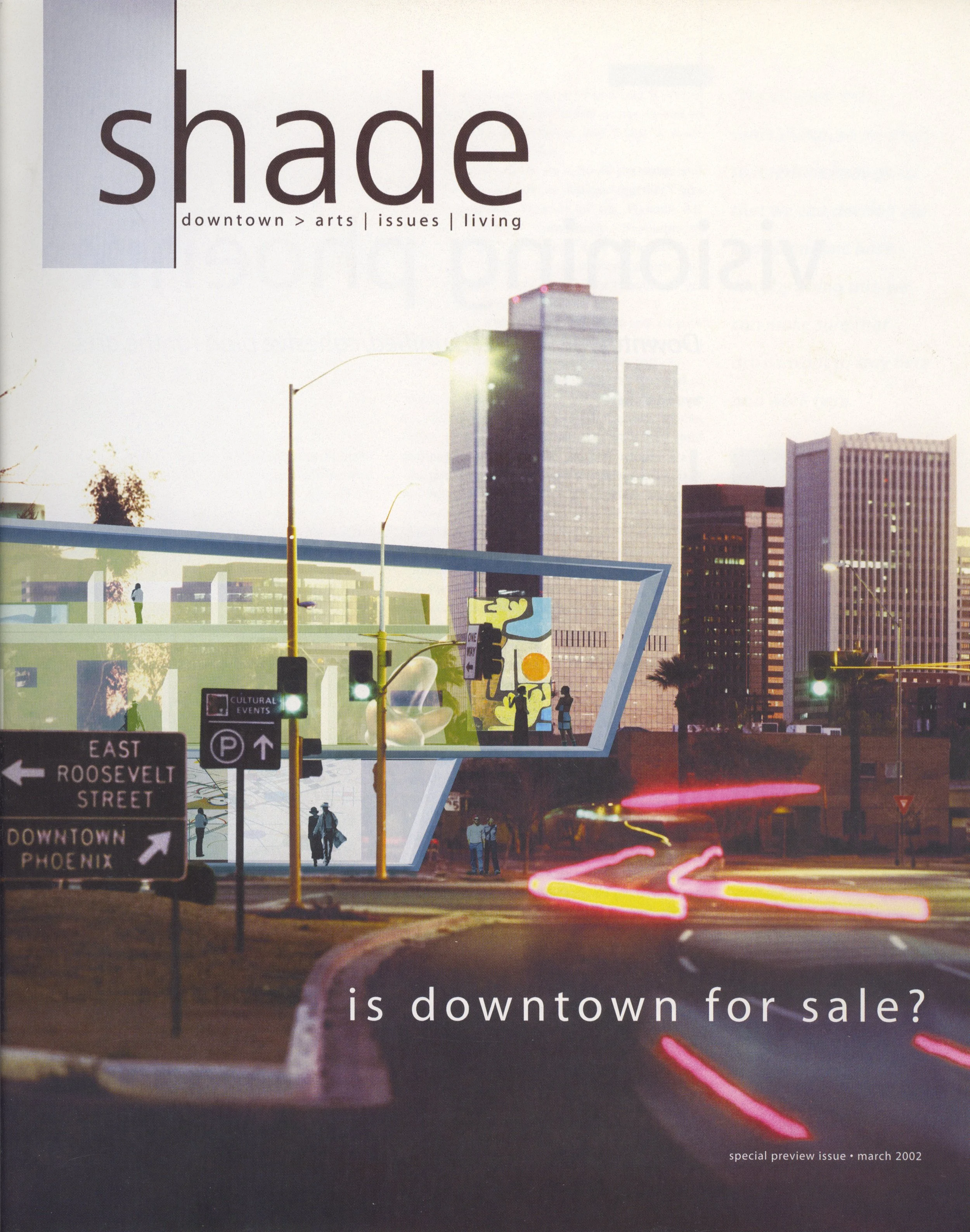
I'm reading it again this week, because the Arizona Republic asked me for a comment on the changes coming to First Fridays on Roosevelt Row, and the question on the cover of that twenty-four-year-old preview issue is, somehow, still the question.
The lead article, "Visioning Phoenix," argued that downtown needed a unified, cohesive plan for the arts — that without one, the area would either be sold to the highest bidder or lost to a thousand small compromises. The piece quoted Roberta Hancock, then Director of the Phoenix Art District's Community Development Commission, warning that without cohesion, "special interest groups can just come in here and divide and conquer." It quoted Nan Ellin, professor of Architecture at ASU, warning that suburban design dropped into urban space would kill the city. It quoted Don Keuth at the Phoenix Community Alliance saying any future development had to include an arts district because the arts are "the cultural fabric of the area."
We were arguing, in 2002, for the kind of downtown that some of us went on to build. Roosevelt Row didn't happen by accident. It happened because people like Cindy Dach, Greg Esser, Kimber Lanning, and a long list of artists, gallerists, neighbors, and believers — myself included — made it happen on what were then mostly vacant lots. We kept showing up. We kept negotiating. We kept insisting that what got built reflected the values of the people who lived there.
The First Fridays of the last few years drifted from that vision. Not because vendors are bad people — they aren't — but because a curated cultural event and an open-air market are different things, and trying to be both means becoming neither. The RRCDC is making a hard call, and I think it's the right one. Great cities evolve constantly. Roosevelt Row has changed many times over the years. This is an opportunity to reassess what kind of walkable downtown we actually want and deserve.
I'm putting the Shade preview issue online as the first piece of an archive I'm building of all eighteen issues we published between 2002 and 2004. The full archive is coming. But this one feels right to start with, this week.
It's strange to read an argument you helped publish a quarter-century ago and find it newly relevant. It's also a little reassuring. The questions worth asking tend to stay worth asking. The work of building a city worth living in is never finished — it just gets handed forward.
More of my writing lives on Substack, alongside the letters to Will. Follow along if you'd like it as it comes. — Wayne