The Divine Children
Exhibited at Shepley Bulfinch, Phoenix · August 29 – October 30, 2026 · Limited-edition prints available — write to wr@waynerainey.com
Photographs by Wayne Rainey
In 2026, I traveled with family to Iceland and photographed them moving through a landscape that has to be seen to be believed. New volcanic fields, waterfalls one may walk behind, moss and lichen that has been growing over lava since before the sagas were ever even whispered.
Our children did what children do: they ran ahead, wild, climbed what shouldn't be climbed, leapt and fell, disappeared over ridgelines, and eventually returned, once completely spent.
Joseph Campbell wrote of The Divine Child, the hero before the call, innocent and already carrying everything the story of life demands. These photographs are that story taken in the one place left on earth whose land still openly performs its mythology.
The images that follow outline an arc — the departure, a passage of trials and crossings, and the return. The concept is a thread, not a chain. I did not costume the children or even direct them, I didn't need to. These are the true life embodiments and adventures as they naturally unfolded.
The titles are drawn from Norse folklore, from the places themselves, and from what the frames beckoned to be called. Life loves to echo and the myths, they illustrate our love for life.
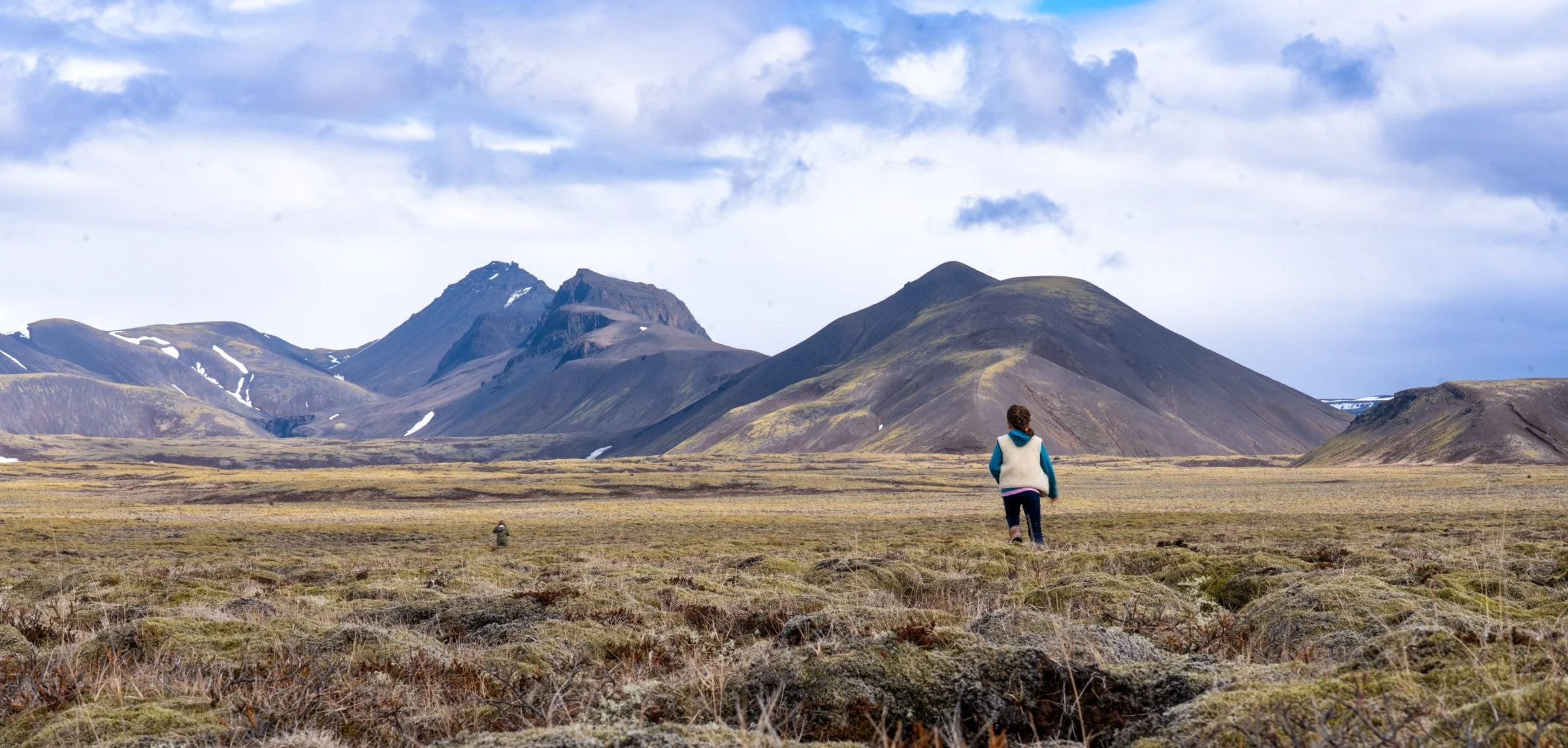
The Call
A girl walks away, toward two dark mountains that rise from the plain like a gate. Far ahead, almost lost in the middle distance, a smaller figure has already gone on. This is the first step of the whole journey — the moment the known world has fallen behind them and neither child will look back.
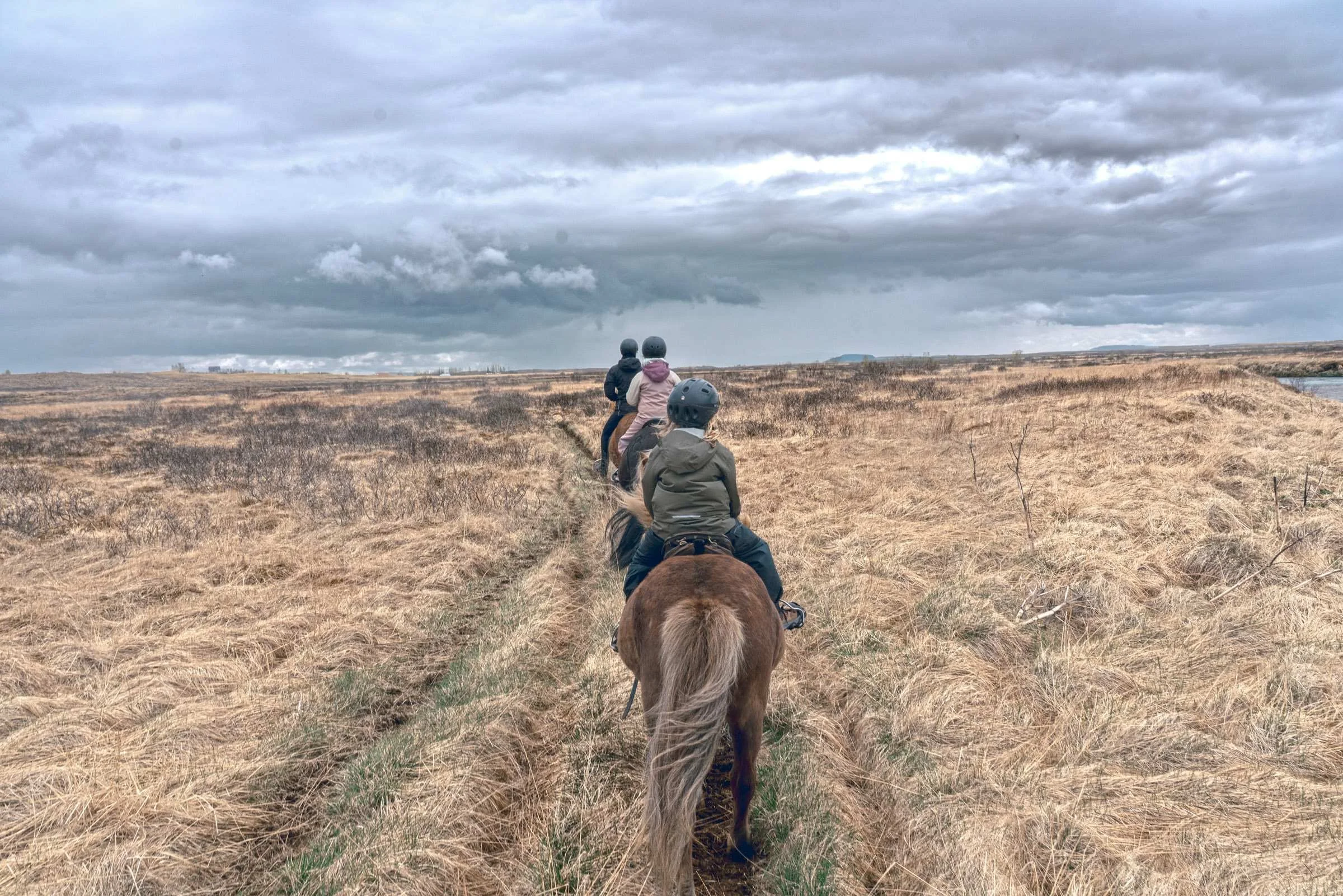
Riding Out
A line of riders on Icelandic ponies move single-file through pale winter grass under a bruising sky. These horses' ancestors carried settlers across the island a thousand years ago; the track they follow is worn into the earth, a sentence repeated until it became prayer. The children ride out the way every hero rides out — in line, behind another, not yet alone.
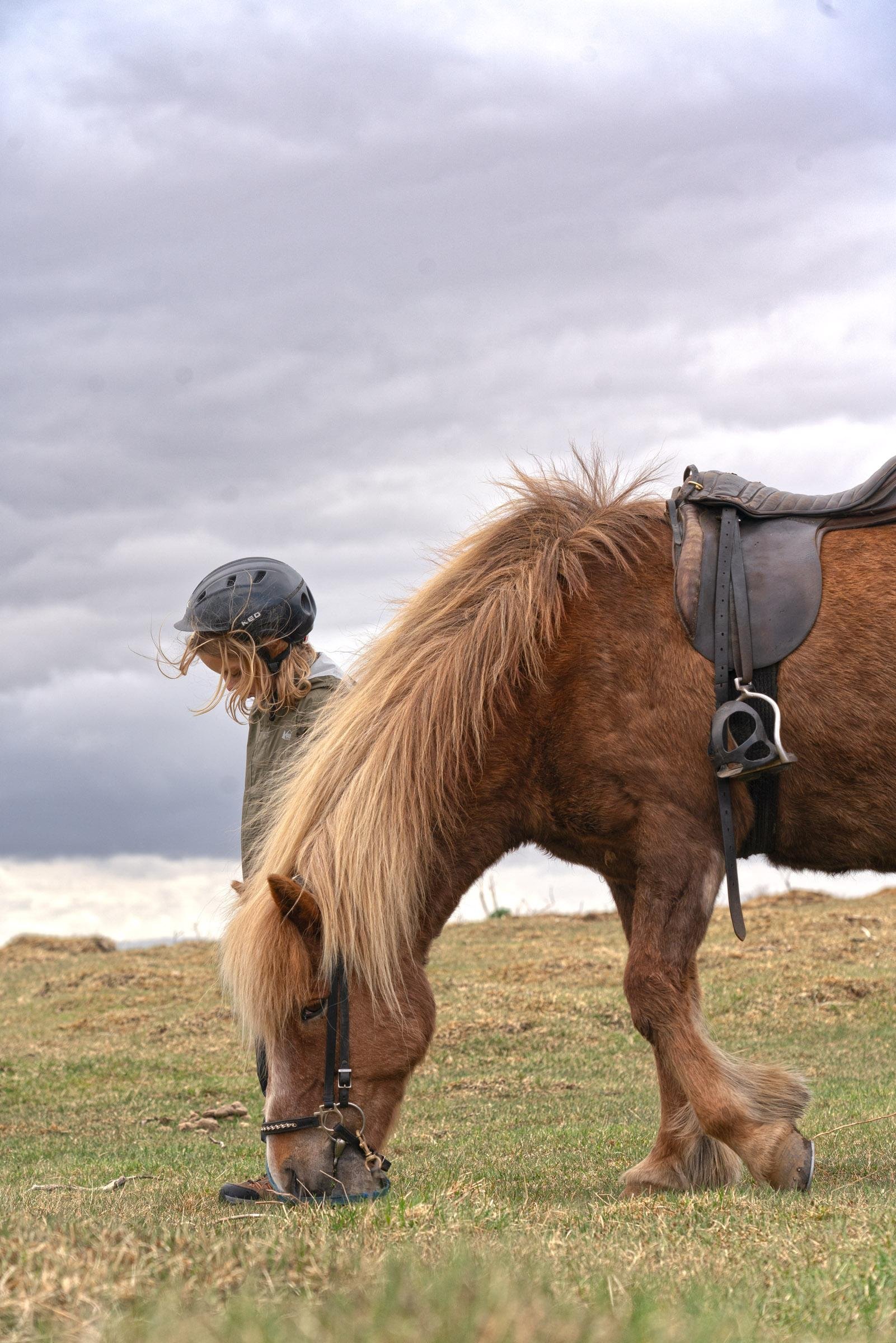
Fylgja
In old Icelandic belief, a fylgja is a guardian spirit that walks beside a person, often taking animal form — bound to them, carrying something of their fate. Here it wears a blond mane, grazing quietly in the high pasture while a small helmeted rider stands close beside it, in no hurry to be anywhere else. A child and a horse, closer to kin than companions.
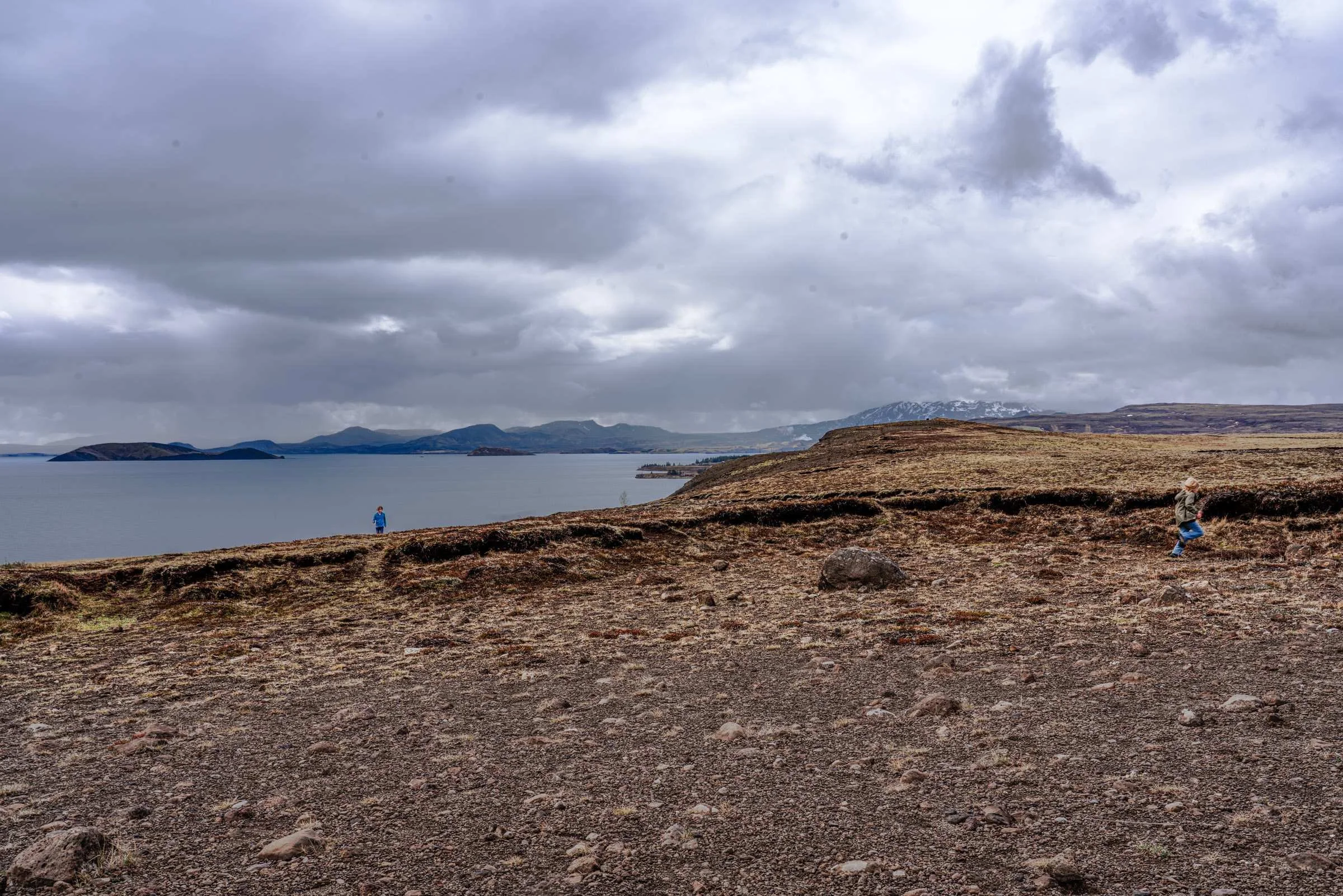
Jörmungandr's Shore
Jörmungandr, the World Serpent, lies coiled in the sea that rings Miðgarðr, holding its own tail in its teeth — the boundary of the known world made monstrous and infinite at once. Here that boundary is a lake shore under a torn sky, islands rising from still water, mountains dusted with snow beyond. One child has already reached the water's edge; the other is still scrambling up over the turf bank behind, not yet arrived at the same threshold. The serpent is never seen. The shore is enough.
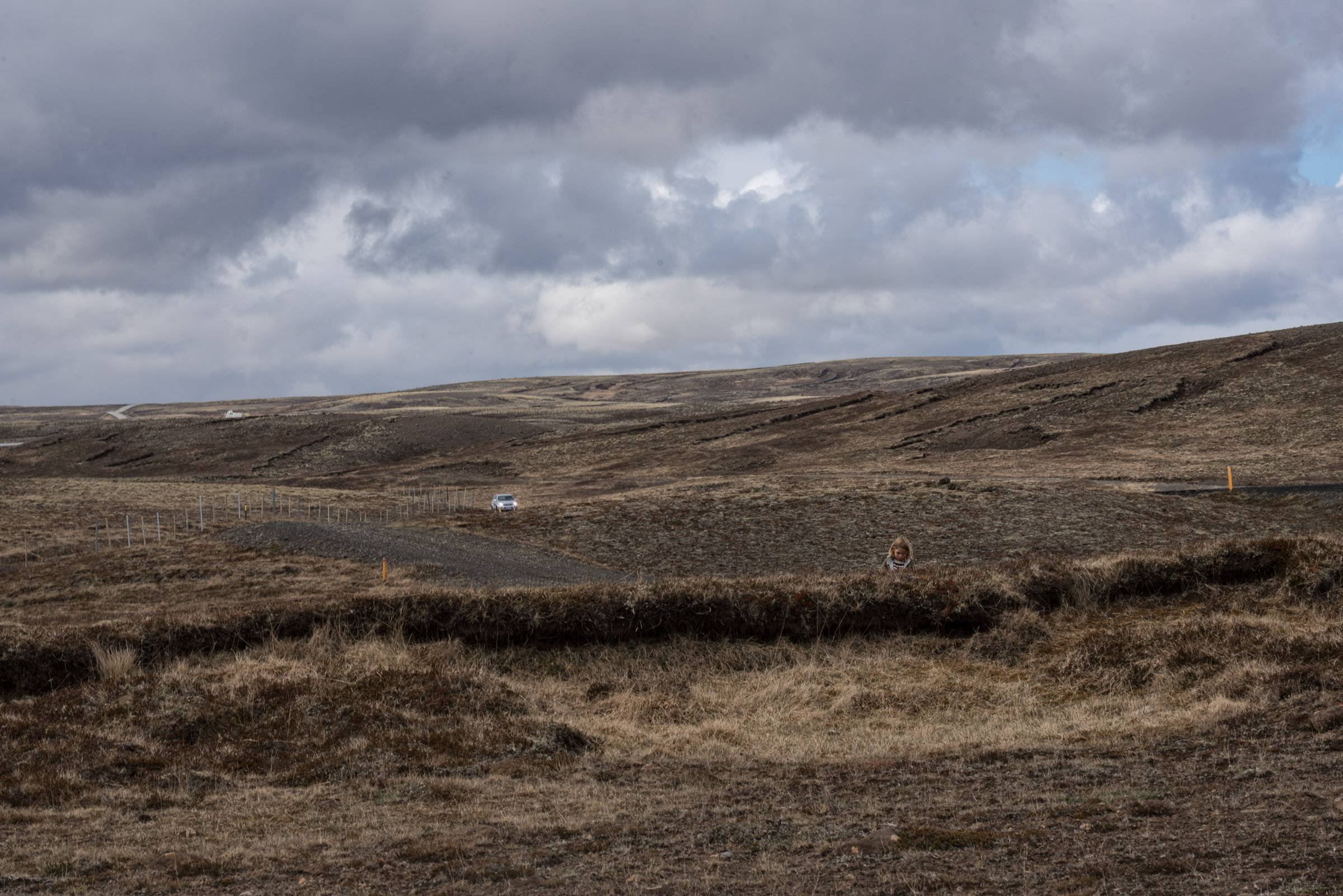
Alfaraleið
Alfaraleið — the old common roads, worn by a thousand years of travelers crossing this island on foot, some still marked by cairns and used today. A child's head just clears a turf ridge in the middle distance; far behind, a lone car comes down the gravel road, headlights ablaze, passing through the myth completely unaware. The road doesn't care what walks it — foot, hoof, or engine — only that it's still walked.
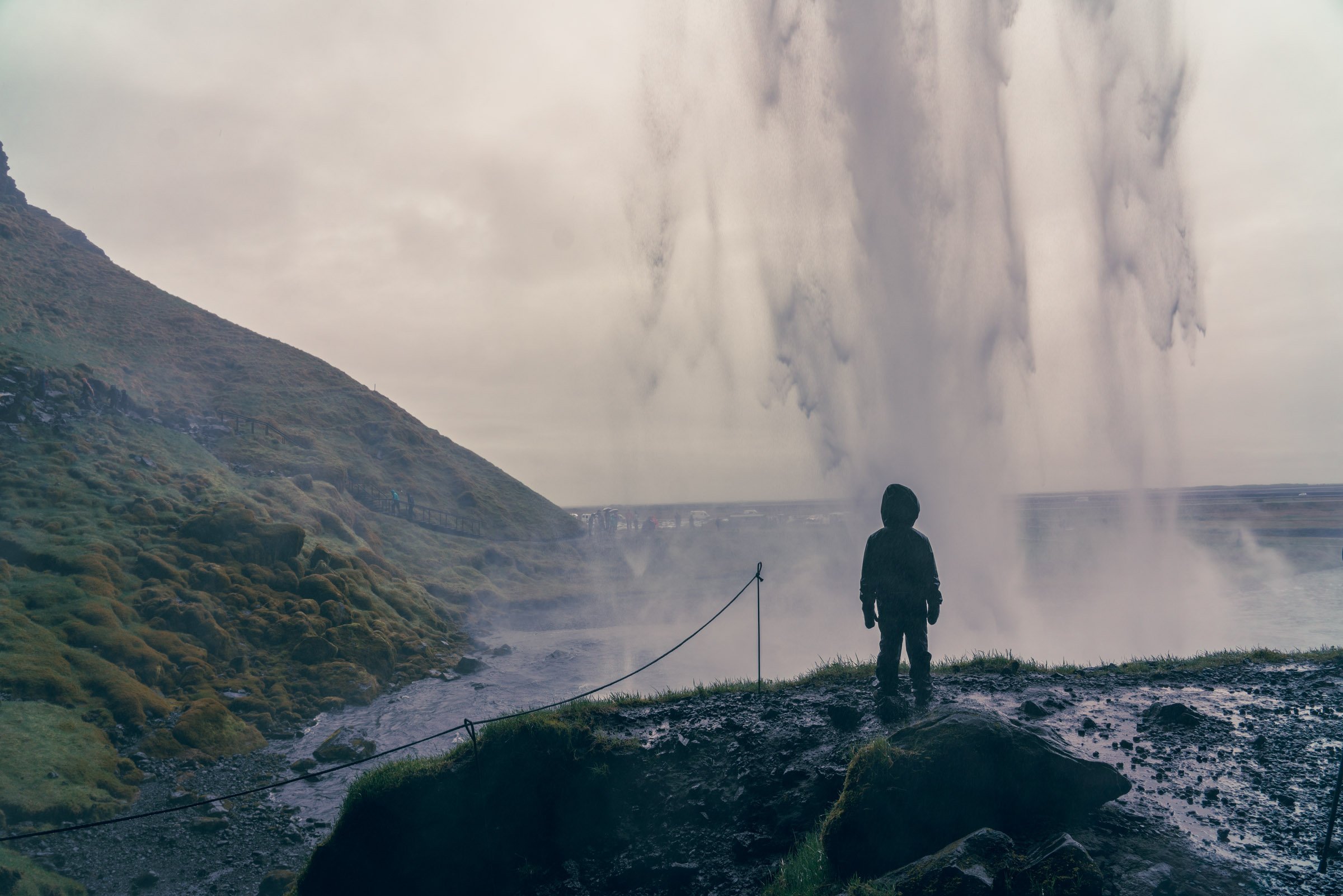
The Threshold
A small hooded figure stands at the rope line where the path ends, facing a wall of falling water taller than the sky. This is the classic threshold of the monomyth made literal — the veil the hero must pass through, the roar that drowns out every voice calling them back. The figure does not flinch.
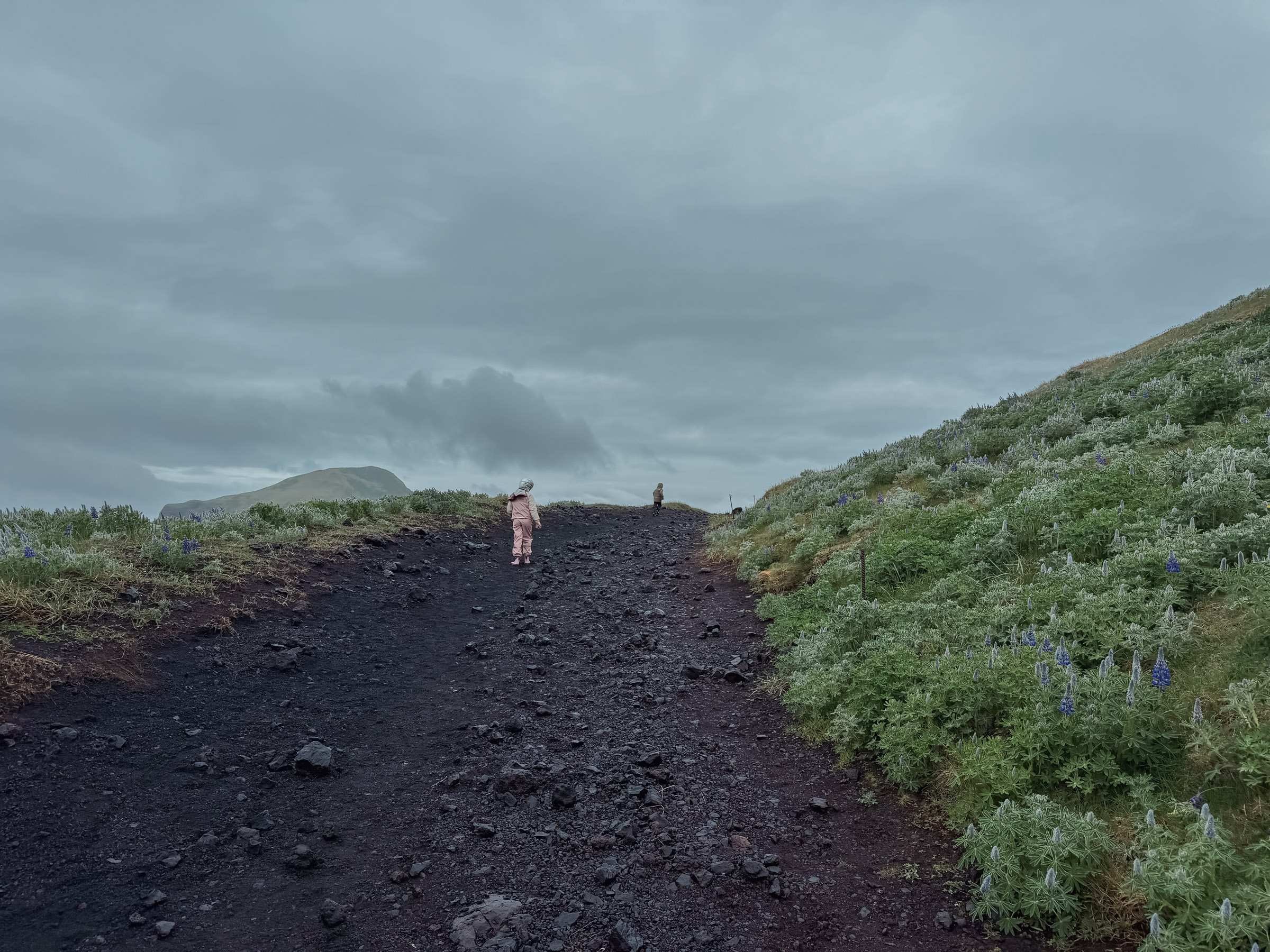
Börn
Börn — children, in Icelandic. Two of them, side by side on a path of black volcanic cinder that runs between banks of lupine toward a shrouded summit. One in pale rose, one in shadow-green, walking away from us into a landscape that erupted within living memory.
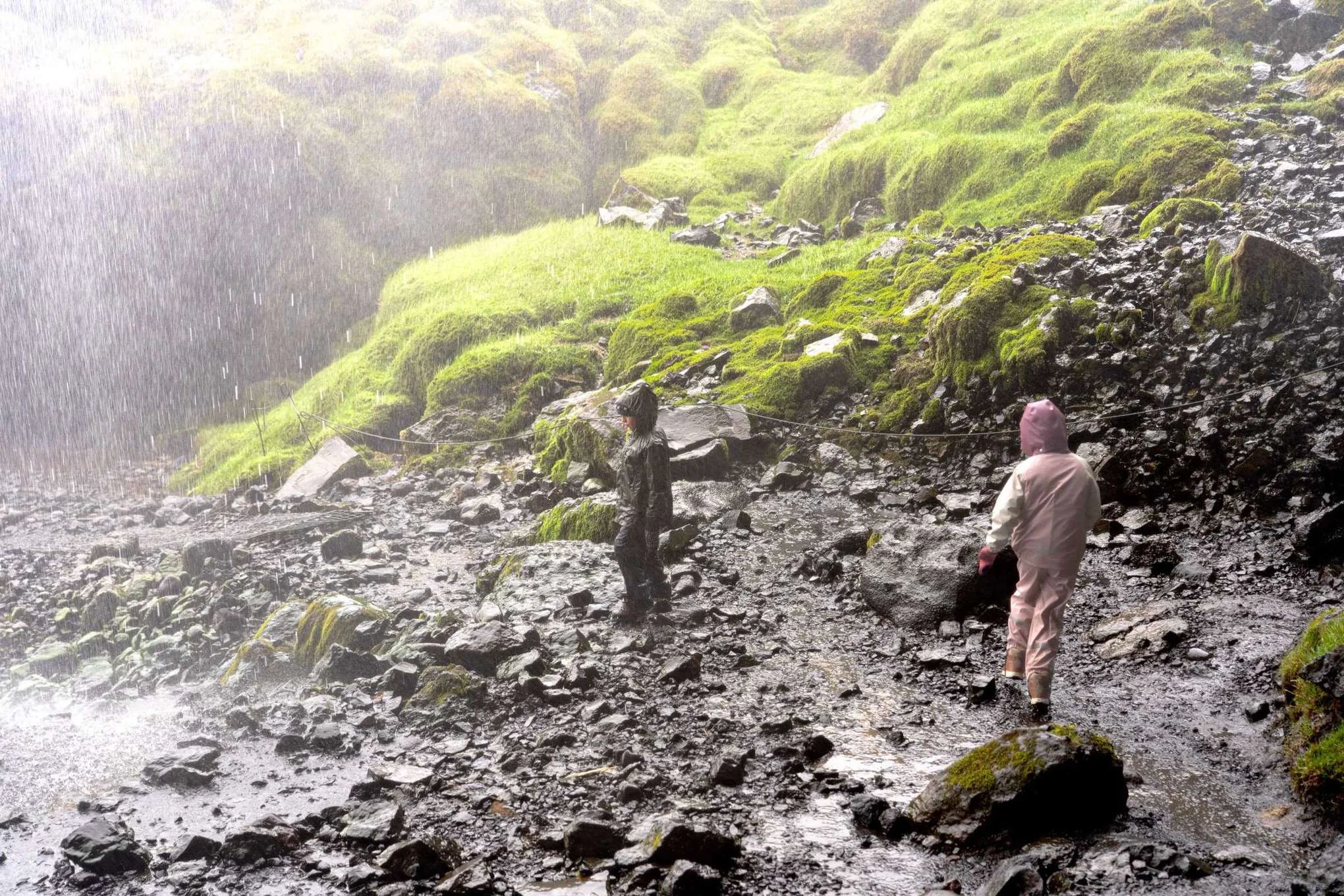
The Canyon Dwellers
Gljúfrabúi — the fall the guidebooks call hidden — means canyon dweller. These two, sealed head to toe in wet rain gear on the streaming rocks, have become exactly that: dwellers of the canyon, anonymous and elemental, their childhood readable only in their smallness. The falling water hangs in the frame like static. Some trials strip away even the faces of those who undergo them.
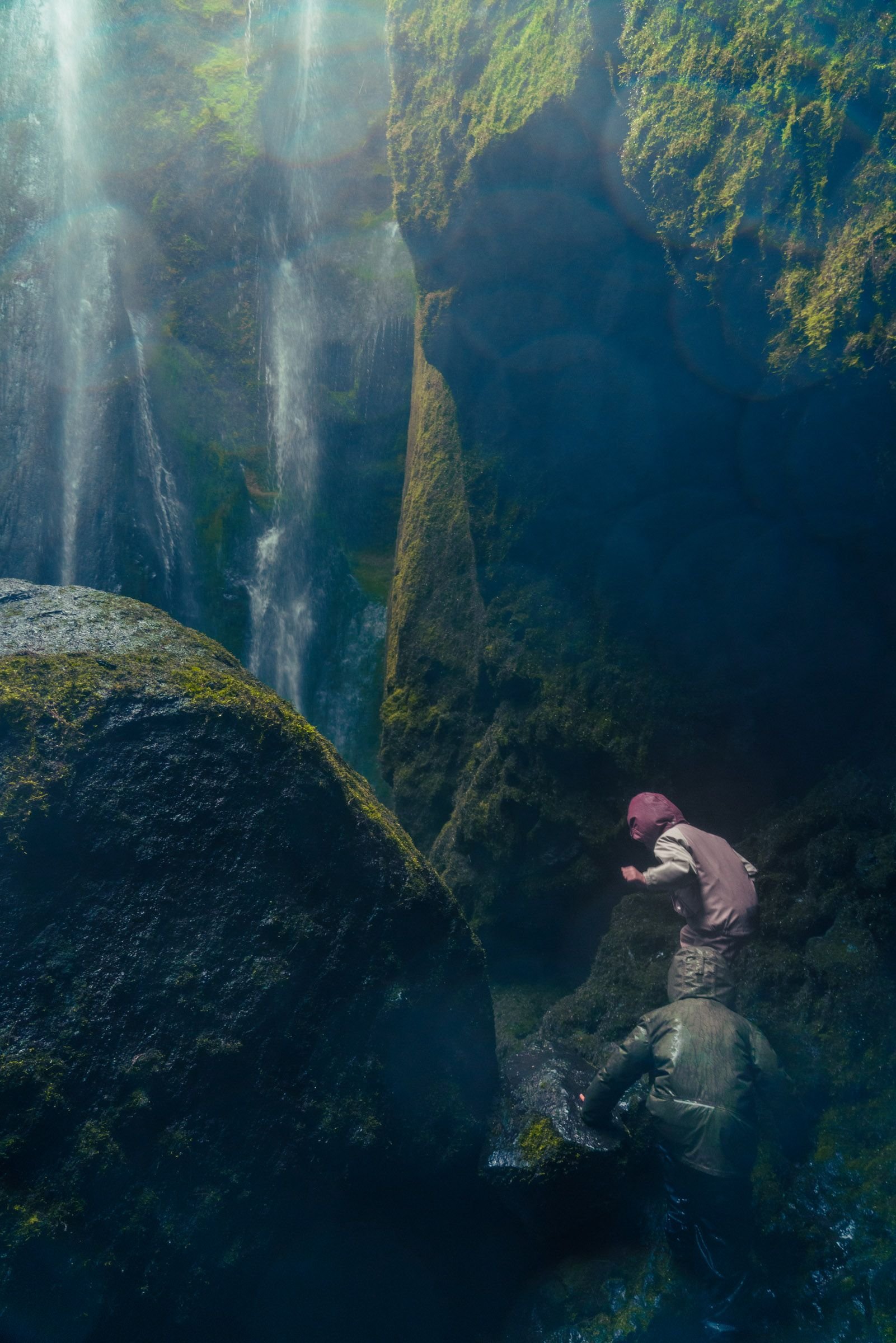
Bifröst
The rainbow bridge of the gods was said to shimmer between the worlds, visible only in certain light. Here the lens itself builds it — flare blooming across the frame in rings and veils of color as two small figures climb the wet rock below the falls. What a technician would call an artifact, the myth calls a crossing.
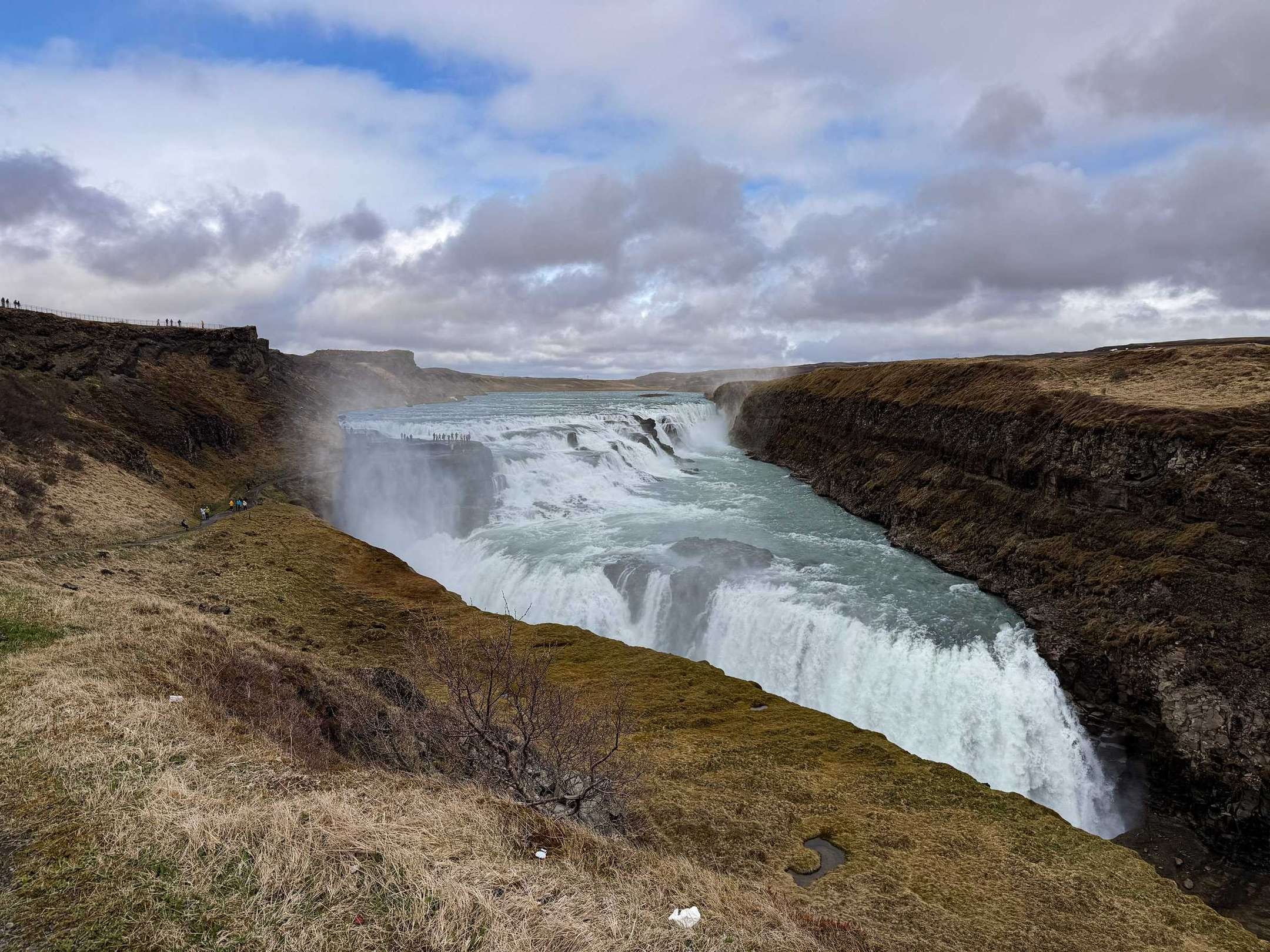
The Crossing
The golden falls, thundering through their canyon under a torn sky. Look closely at the near path: a flash of pink — Gilly in her signature jacket — and Will, sitting to rest above the water. In a show built on children made small by the land, this is the landscape at its most overwhelming and the children at their most nearly lost within it. A crossing in the oldest sense: the place where the road meets something vastly stronger than the traveler, and continues anyway.
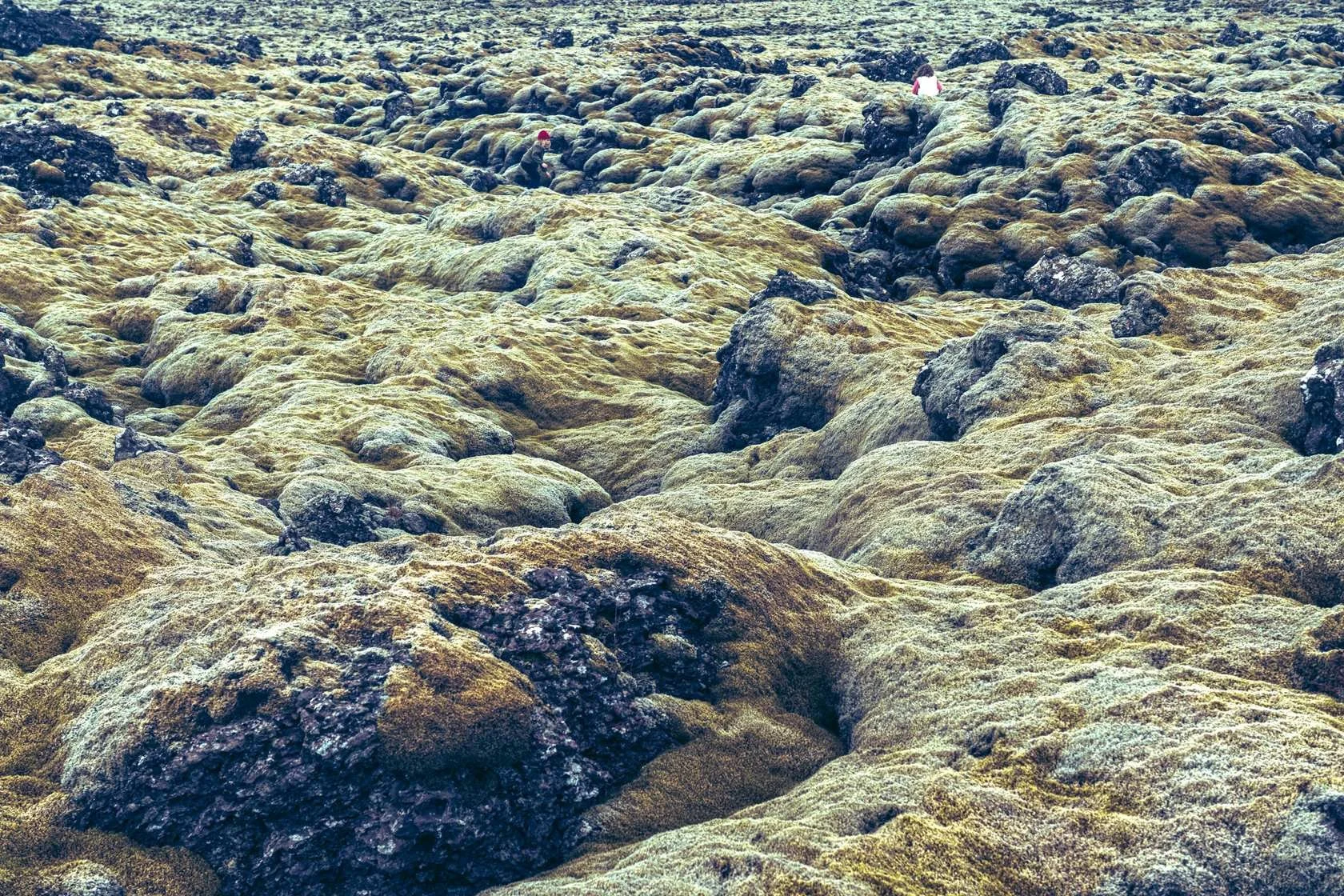
Huldufólk — The Hidden Folk
Iceland has always known that the land is inhabited by beings glimpsed only sideways — the huldufólk, the hidden people, living inside the rocks. In this frame the elf-hills go on forever: an ocean of moss-covered lava swelling to the horizon, and in it, two small bright figures half-swallowed by the terrain. They are not lost. They are becoming what the land has always said lived here.
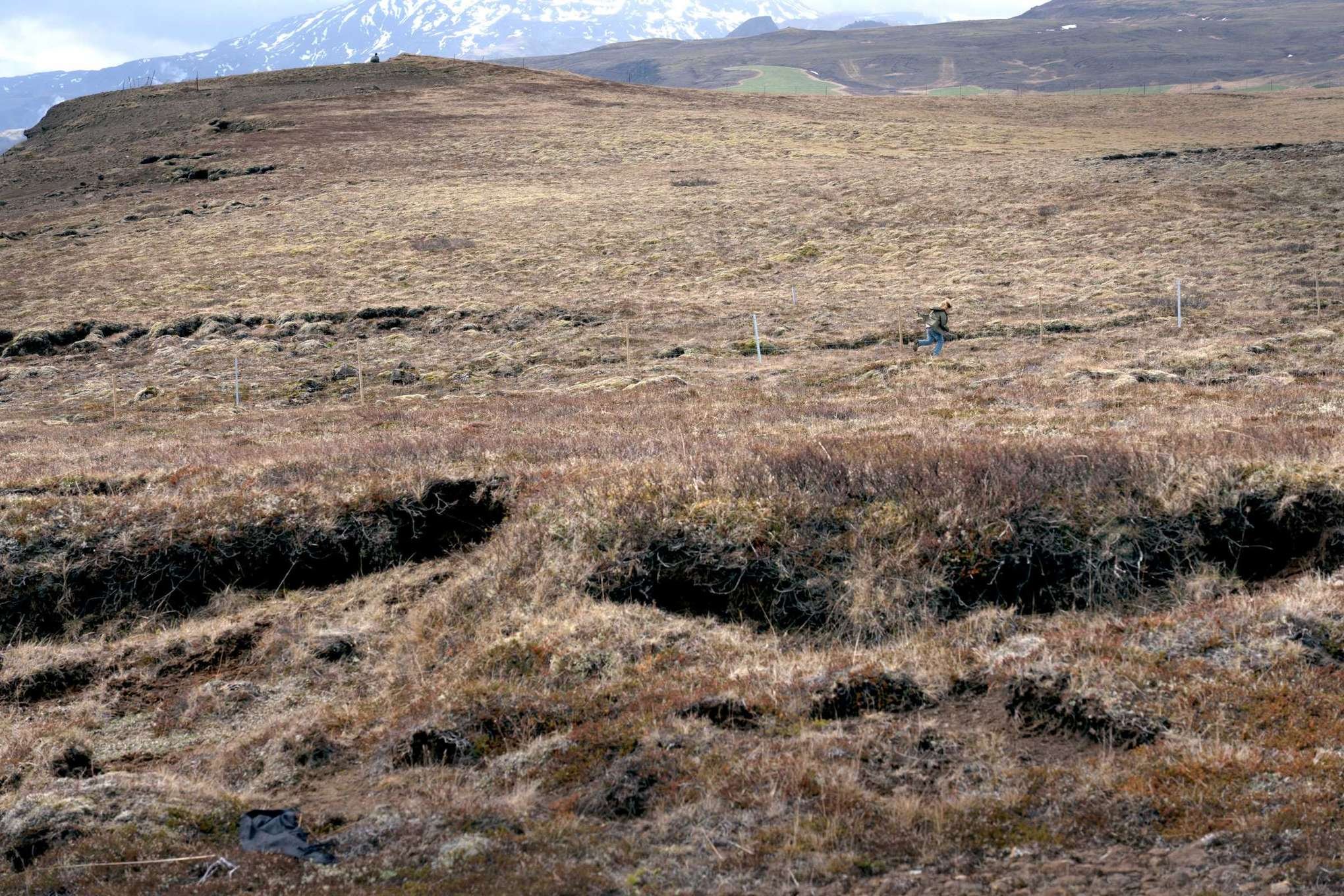
Vörður — The Waymark
For a thousand years travelers crossing this island have stacked stones into vörður — cairns — so the next walker would know the way. On the hill's crest, a cairn. Below it, running the fence line across an enormity of winter grass with snowfields hanging behind, one child at the smallest scale in the entire show.
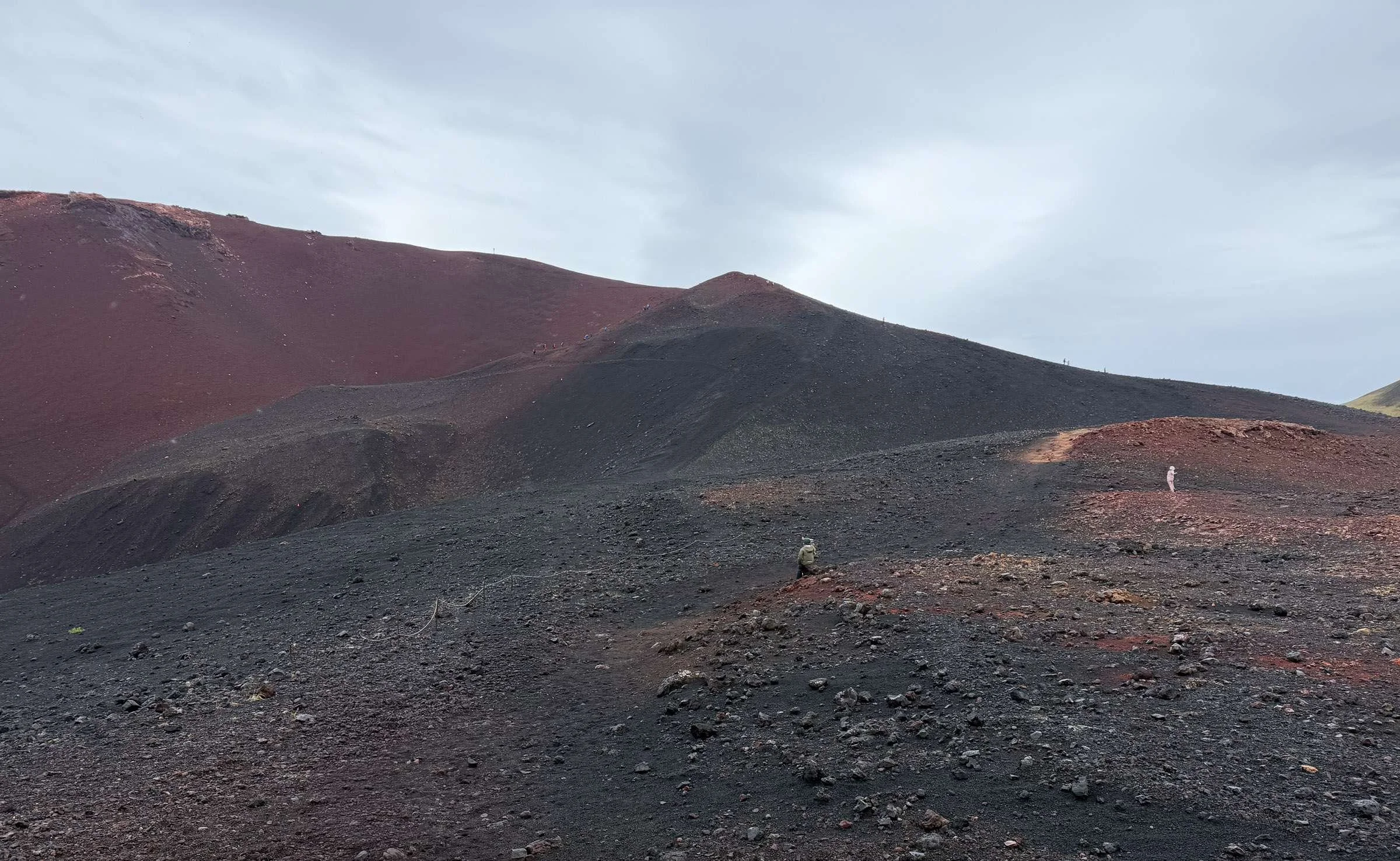
Muspell
Before the world, says the Edda, there was Muspelheim — the realm of fire. Eldfell, the fire mountain, rose out of the edge of this town in 1973, in a single winter. Fifty years on, its slopes are still raw red and black, and two small figures stand far apart on the cinder like the first people set down in a world just cooled.
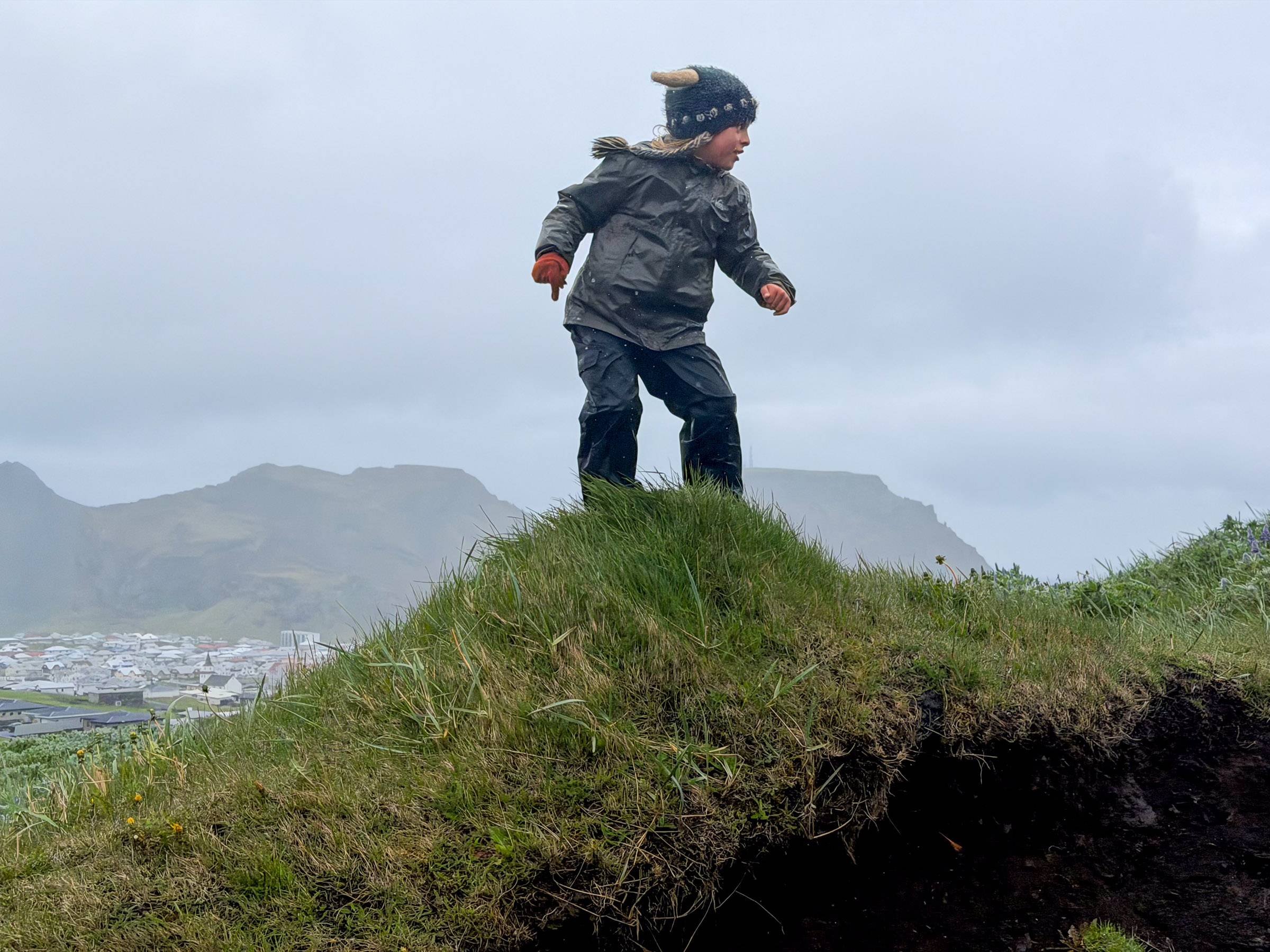
Baldr — The Return
Baldr was the shining one — the beloved child of the gods, the one whose light everything else was measured against. Here he wears a horned wool hat and rain gear, mid-stride on a green summit, the white town spread out below him through the mist. The journey ends where journeys end: above the place you started, changed, in motion, crowned by something your mother pulled over your ears.
Notes on the Object
A word on process, and on what was never hidden. Every child in these fourteen frames wears their own clothes — synthetic rain shells, rubber boots, a borrowed fleece vest, a riding helmet, a knit hat with felt horns sewn on for a costume that isn't a costume at all. Nothing here was staged to look older than it is. The rope lines at the waterfall, the car on the gravel road, the flare in the lens — these stay too, for the same reason. The anachronisms aren't a handful of exceptions I chose not to retouch. They're the whole method.
Mythology after all is simply history. The places change, as do the names, but the stories remain and echo like the water from the falls. We are a village. We are the heroes of our days.
The Divine Children opened at Shepley Bulfinch, Phoenix, August 29–30, 2026, and remains on view through October 30, 2026. Prints are available in three editions — Small, Medium, and Extra Large — each numbered with a certificate of authenticity. For pricing and availability, see Available Editions.